By Eric McAlpine, Founder & CEO, Momentum Cyber
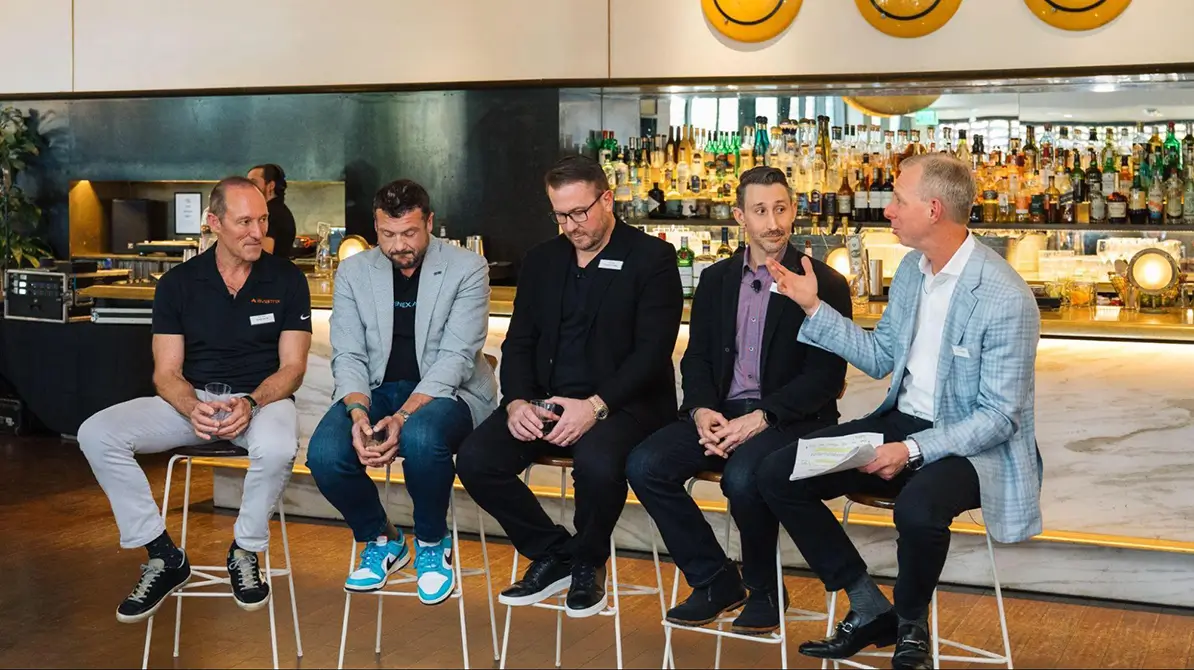
On March 12, Momentum Cyber hosted our inaugural AIxCYBER event during SXSW in Austin, bringing together nearly 200 cybersecurity executives, venture and private equity investors, entrepreneurs, and corporate development leaders for an evening centered on the forces reshaping our industry.
I want to start by thanking our outstanding panelists: Doug Merritt, Chairman and CEO of Aviatrix and former CEO of Splunk; Eric Foster, CEO and Founder of TENEX.AI; Greg Genung, CEO and Founder of Snowfire.AI; and Crichton Hicks, Partner at Live Oak Ventures. I also want to thank the CISOs, investors, and industry influencers who carved out time during a packed week to be in the room. The caliber of the conversation, both on stage and off, confirmed what we already believed: this is a pivotal moment for our industry, and there is real appetite to come together and discuss the substantive issues surrounding AI and cybersecurity.
Why Now
We launched AIxCYBER because the data in our 2026 Cybersecurity Almanac pointed to something we felt deserved more than a report. It deserved a room full of the people making the decisions that will define the next era of this market.
The Almanac documented record strategic activity in 2025: $96B in cybersecurity M&A across 400 transactions, $20.7B in financing across 820 rounds, and the emergence of AI Security as the fastest-forming subsector in cybersecurity history. But numbers alone don’t tell the full story. We structured the AIxCYBER panel around three forces that explain why this activity is happening, why it’s structural rather than cyclical, and what it means for the builders, buyers, and backers who are navigating it.
Three Forces Driving the Market
The AI Landscape Shock: Artificial intelligence has rapidly accelerated the technology transition (compressing a decade into about three years), simultaneously boosting attacker capabilities and generating new defensive tools. Organizations must rearchitect their security posture around AI to stay competitive, rather than simply bolting it on.
The Architectural Divide: This is a widening gap between the speed of cloud workload deployment and the ability to enforce consistent security policy across fragmented multi-cloud, hybrid, and edge environments. This complexity is compounded by AI workloads. Investors are rewarding companies that close the three architectural gaps (fragmentation, runtime enforcement, and ownership) while CISOs are recognizing that closing the architectural divide is a business imperative.
The Financial Super Cycle: The market is experiencing a unique financial environment, as evidenced by strategic buyers claiming 92% of M&A value in 2025. Capital is concentrating, and a two-tier public market has formed as the IPO window is expected to reopen in 2026. This dynamic rewards platform solutions while punishing point solutions.
What We Heard
The panelists shared remarkable insights about this dynamic moment in our industry. A few themes stood out:
New business and technology imperatives are inseparable. The line between “security company” and “AI company” is dissolving. The panelists agreed that the winners in the next cycle will be the companies that treat AI not as a feature but as an architectural foundation, and that treat security not as a cost center but as the enabling infrastructure for the AI economy.
Clear factors separate the companies that will win from those that won’t. Platform-scale thinking, cloud-native architecture, the ability to enforce policy in real time across fragmented environments, and the discipline to build for consolidation rather than just for initial traction. The Almanac data backs this up: cloud-native SaaS deals accounted for 97% of all M&A capital deployed in 2025.
The implications for the market are profound. We are witnessing a structural repricing of cybersecurity as foundational infrastructure. That repricing is creating generational opportunities for founders who build category-defining companies, for investors who back them at the right moment, and for strategic acquirers who use M&A to secure architectural control points before competitors do. It is also creating real risk for organizations, both companies and their security teams, that fail to adapt their architectures to a landscape that is moving at unprecedented speed.
What’s Next
AIxCYBER was designed to be an event where the people shaping the cybersecurity market can engage with the real issues, grounded in data and informed by operators, builders, and investors who are living through this transition. And that’s exactly what it was.
This was our inaugural AIxCYBER. It won’t be the last.
If you haven’t yet downloaded the 2026 Cybersecurity Almanac, it’s available at momentumcyber.com.
Follow us: LinkedIn